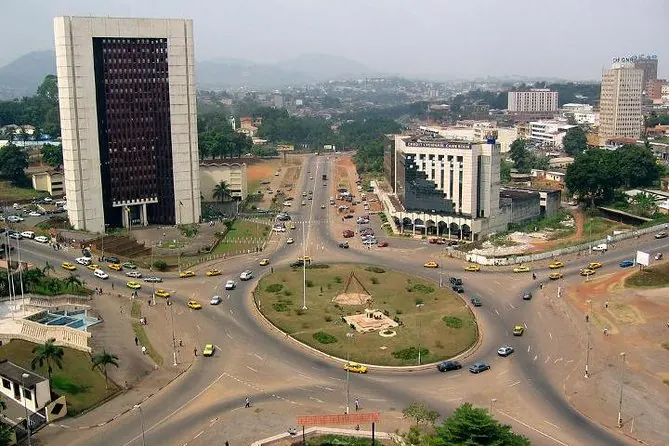
Yaoundé, 8 December 2025—PRESS AFRICA—Cameroon continues to occupy a strategic place in Africa, positioning itself as an important development player but one facing major structural challenges. At continental level, its development ranking reflects this duality: undeniable progress in some sectors, but persistent weaknesses that hold back its transformation.
Moderate performance at continental level
With a diversified economy — agriculture, industry, services — Cameroon stands out in the CEMAC sub-region. According to French Treasury indicators, it accounts for nearly 43% of CEMAC's GDP, making it an economic pivot of the zone.
In industry, it ranks 24th out of 52 African countries on the African Development Bank's (AfDB) Africa Industrialization Index (AII). This modest position reflects progress, but also the scale of the gap that remains to be closed with the continent's most industrialised nations.
Infrastructure challenges and weak structural capacity
According to an AfDB report, Cameroon suffers from a significant infrastructure deficit: it was ranked 28th out of 54 African countries on the Africa Infrastructure Development Index (AIDI), with a very low score, and its motorway ambitions are far from being met.
In the digital sector, the country is also slipping back: according to the ITU, it ranks 6th in Central Africa for ICT but has lost several places since 2017. Its digital strategy is ambitious — aiming to roll out broadband internet, connect rural areas and develop the digital industry — but results remain limited so far.
Economic growth, but inclusion still limited
According to the World Bank, Cameroon's growth was 3.5% in 2024, slightly up on the previous year, driven by agricultural sectors (cocoa, cotton) and a better electricity supply. Nevertheless, this growth remains insufficient to meet the ambitions of the country's National Development Strategy, and poverty remains high, with nearly 40% of the population below the national poverty line, according to the same institution.
The African Development Bank, in its 2025 Country Report, also calls on Yaoundé to mobilise domestic resources better in order to finance more inclusive development.
The lack of transparency
The World Bank's July 2025 report highlights the strategic role of Cameroon's forests — a veritable "green gold" — in the country's future growth. However, its membership of the Extractive Industries Transparency Initiative (EITI) was suspended in 2024, which raises legitimate questions about the governance of revenue from natural resources.
Real strengths, but a difficult course to hold
Cameroon has undeniable development potential: a diversified economy, forest resources and a proactive digital strategy. At continental level, its ranking is not among the most advanced, but it remains a key player in Central Africa and beyond.
To step up, the country must remove its structural bottlenecks: improve its infrastructure, strengthen governance and mobilise its domestic resources transparently. If these levers are used effectively, Cameroon could not only consolidate its regional position but also climb the rankings of development in Africa — and contribute lastingly to more integrated African development.
Writer: BAWA ALLAH Khadidjatou A.
Leave a Comment