
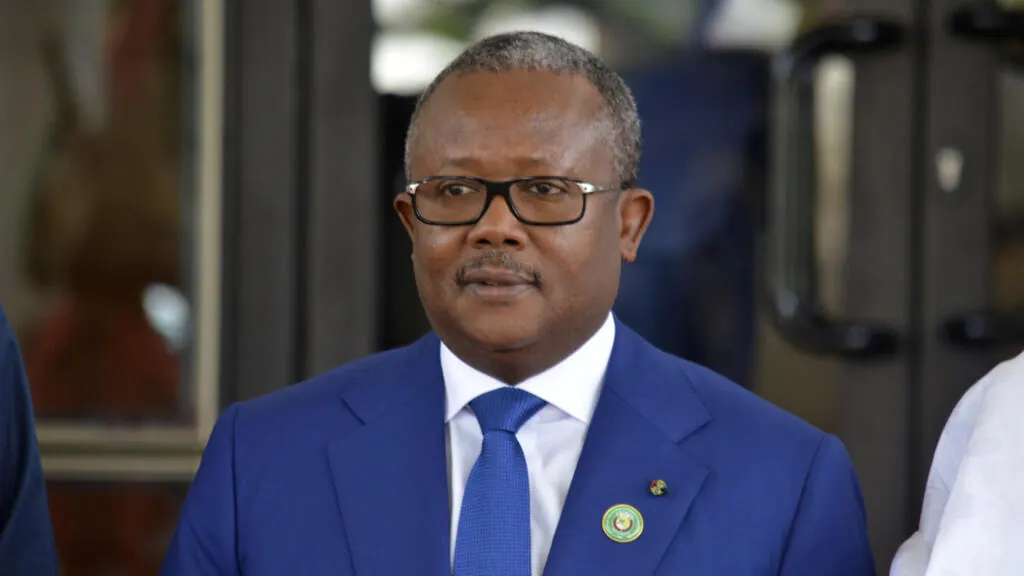
Bissau, 7 January 2026 – PRESS AFRICA – Since the removal of President Umaro Sissoco Embaló, Guinea-Bissau has been going through a period of political realignment that is directly affecting citizens' daily lives. Caught between hopes of change, institutional uncertainty and social resilience, Bissau-Guineans are trying to stay the course in a country used to abrupt transitions.
A persistent climate of political uncertainty
The end of Umaro Sissoco Embaló's disputed term has left a relative political vacuum, marked by debates over the legitimacy of the new authorities and over the timetable for a return to constitutional order. In the streets of Bissau, as in the rest of the country, this uncertainty translates into widespread caution: slowed-down administrations, deferred economic decisions, and political actors waiting for clear signals.
A fragile economy, purchasing power under pressure
Economically, the effects of the transition are being felt. Heavily dependent on cashew nut exports, Guinea-Bissau remains vulnerable to political shocks. Business operators fear a slowdown in activity, while households face a high cost of living, particularly for imported goods.
The informal sector, which employs a large share of the population, nevertheless continues to act as a social shock absorber. Markets remain lively, a sign of a survival economy that adapts, even in the absence of clear short-term prospects.
Public services and social expectations
In health and education, the situation remains mixed. While essential services are functioning, they suffer from a chronic lack of resources, made worse by political instability. Trade unions are calling for guarantees on the regular payment of salaries and the continuity of social policies, fearing that the transition will push these priorities onto the back burner.
For young people, who make up the majority of the population, the post-Embaló era is seen as both a source of hope and of frustration. Many aspire to more inclusive governance and economic opportunities, but fear a prolonged transition that would delay these promises yet again.
Between weariness and hope for renewal
Socially, the former president's removal has revived debates over governance, corruption and the place of the army in political life. While some welcome the end of a rule deemed authoritarian, others fear a new episode of instability, recalling the many precedents of aborted transitions in the country's history.
Even so, part of civil society sees this period as a turning point, one that could pave the way for a national dialogue and a rebuilding of institutions.
A future that hangs on political choices
Life for Bissau-Guineans after the removal of Umaro Sissoco Embaló is thus defined by a fragile balance between the continuity of everyday life and political uncertainty. More than changes in leadership, the population now expects concrete action: stability, functioning public services and economic prospects.
In a country where normality has often been the exception, the challenge for the new authorities is clear: to turn this transition into an opportunity for a positive break with the past, so that the post-Embaló era is not just one more parenthesis, but the starting point of lasting stability.
Writer: BAWA ALLAH Khadidjatou A.

Leave a Comment