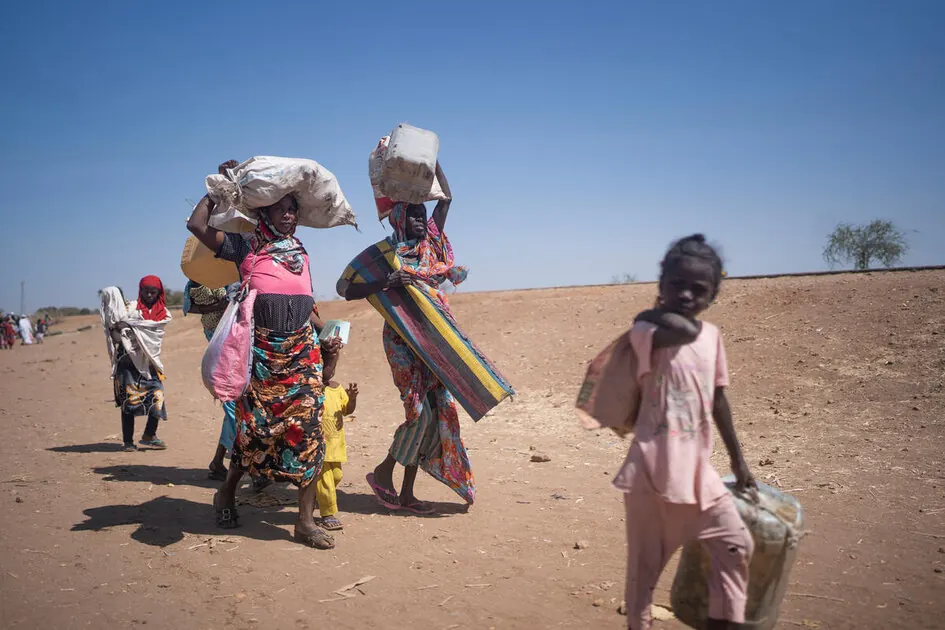
Khartoum, 7 January 2026 —PRESS AFRICA— Gripped by a devastating civil conflict since April 2023, Sudan, one of the richest countries in Africa in terms of history, now faces a deep financial crisis that threatens not only the future of its economy but also the survival of millions of its citizens.
The war between the Sudanese Armed Forces (SAF) and the Rapid Support Forces (RSF) has turned this country of 45 million people into a battleground whose fighting has paralysed productive sectors, markets and institutions. The economic consequences are catastrophic.
Collapsing GDP and shrinking activity
Since the start of the war, the Sudanese economy has contracted dramatically. Consistent estimates point to a fall in gross domestic product (GDP) of nearly 40% in 2023, followed by a further contraction in 2024, the direct result of destroyed infrastructure, paralysed trade and a scarcity of inputs for agriculture and industry.
The drop marks one of the worst modern economic regressions for a country whose economy was already fragile before the conflict. Foreign trade has collapsed, supply chains are broken, and many businesses have closed or moved their operations to safer regions or abroad.
Runaway inflation and a currency in free fall
One of the most visible consequences for citizens is hyperinflation. According to estimates from the International Monetary Fund (IMF) and economic analysts, consumer prices have risen by several hundred percent, wiping out the purchasing power of Sudanese households.
The national currency, the Sudanese pound, has collapsed on the parallel market, leading to an almost total loss of confidence in the monetary system. In some regions, transactions are now made in dollars or through barter, a sign of a currency that has lost its essential function as a unit of account.
Public revenue and debt: on the verge of suffocation
State revenue has fallen by more than 80%, depriving the government of the means to fund essential public services or to intervene to stabilise the economy.
At the same time, indebtedness has soared. Public debt has climbed to record levels, far exceeding 250% of GDP, a consequence of accumulated arrears and of the halt to the debt relief programmes negotiated with the IMF and other international lenders before the war.
This over-indebtedness, combined with gigantic budget deficits, has left Khartoum in an unprecedented financial impasse, making any viable economic policy almost impossible as long as the conflict persists.
Key sectors decimated and widespread poverty
Agriculture, formerly a pillar of the Sudanese economy, is now largely at a standstill, with more than 60% of agricultural and industrial activity disrupted or completely halted. This has not only reduced local food production, worsening food insecurity, but also eliminated one of the few sectors still capable of generating income.
According to estimates from international bodies, more than two-thirds of the population now lives below the extreme poverty line, dependent on humanitarian aid to survive.
Outlook and international intervention
Although some projections suggest a possible easing of inflation and a modest recovery in GDP if lasting peace is established, these scenarios remain dependent on a genuine ceasefire and the rebuilding of state institutions.
International organisations and development banks have called for massive aid to prevent the country's complete collapse and to support the population, but efforts are hampered by persistent insecurity.
In Sudan, the war is not being fought only on the battlefield; it has also destroyed the economy. Hyperinflation, falling output, collapsing public revenue and over-indebtedness have plunged millions of Sudanese into deep financial distress. As long as peace remains out of reach, the country's economic prospects remain bleakly uncertain, and rebuilding a viable economy will require sustained international commitment over many years.
Writer: BAWA ALLAH Khadidjatou A.
Leave a Comment