
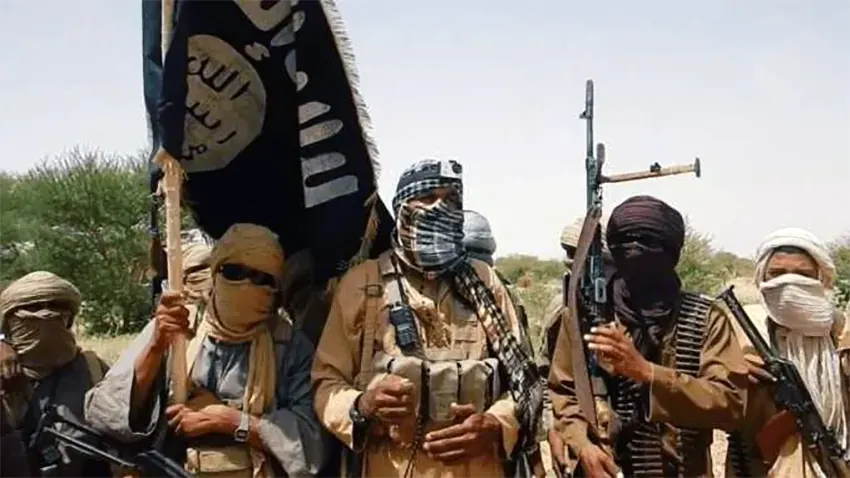
Niamey, 22 October 2025 - PRESS AFRICA - As several parts of Africa face a resurgence of terrorist activity and transnational organised crime, financing the fight against terrorism and disrupting illicit flows have become major challenges. What financing mechanisms are available, what gaps persist, and what are the prospects for making the African response more effective and lasting?
On the continent, terrorist groups and criminal organisations use a variety of funding channels: trafficking in natural resources, extortion, money laundering, ransoms and informal financial transfers. According to the United Nations Office of Counter-Terrorism (UNOCT), the link between organised crime and terrorism is a "growing concern". During a debate in the Security Council, it was noted that the illicit exploitation of natural resources plays a central role in financing armed groups in Africa. This twofold security and financial challenge requires not only military or police operations, but also financial engineering, governance and regional and international cooperation.
Gaps, challenges and obstacles
Several obstacles hamper the effectiveness of counter-terrorism financing in Africa. These include, among others, insufficient predictable and sustainable funding. In the Security Council, it was stressed that Africa was "tired of hearing promises and reaping only disappointment"; limited institutional capacity, reflected in shortcomings in training, in the oversight of financial flows and in transnational cooperation; the opacity of funding channels generated by the informal economy, non-bank transfers or trafficking in natural resources; and the failure to strengthen regional coordination. West African, Sahelian and East African states must better coordinate their compliance regimes, their financial regulations and their cross-border investigations.
Some avenues
An effective fight against terrorist financing must rely on stronger monitoring of illicit financial flows, in particular those that feed terrorism, through better banking supervision and the inclusion of non-financial actors (real estate, precious metals, etc.); robust regional coordination, drawing on institutions and sharing information between states; the mobilisation of more stable, dedicated financial resources, rather than one-off donations, to support national capacities over the long term; the integration of economic development and governance as pillars of prevention; and the involvement of civil society and private actors, because the fight against financial flows cannot rest on the state alone.
Financing the fight against terrorism in Africa is at a crossroads. On the one hand, initiatives are multiplying: donations, regional projects, international partnerships. On the other, institutional challenges, the weakness of sustainable resources and the evolving methods used by terrorist groups to raise funds demand rapid adaptation. For Africa to have a truly effective response, it will need not only funds, but also a long-term architecture capable of following the money, breaking the chains of financing and developing local means.
Reporter: Jaurès BOKO

Leave a Comment