
Dar es Salaam, 6 November 2025—PRESS AFRICA— The East African country is going through a moment of crisis. Barely had the provisional results of the 29 October general election been unveiled — an official score indicating a victory for President Samia Suluhu Hassan with 97.66% — than the protests turned into clashes, urban violence and repression.
Samia Suluhu Hassan, President of Tanzania
Results, protest and social explosion
The announced victory of President Hassan, the candidate of the ruling Chama Cha Mapinduzi (CCM) party, was marked by the absence from the starting line of two of the main opponents — Tundu Lissu of the opposition and Luhaga Mpina of ACT-Wazalendo — which immediately raised questions about the legitimacy of the electoral process.
From the day after the vote, protests broke out in several cities, including the economic capital, Dar es Salaam. Protesters there denounced a "sham vote", a facade of democracy and the elimination of any real competition.
Repression, curfew and internet shutdowns
To deal with the protests, the authorities imposed emergency measures: a night-time curfew in major urban areas, a nationwide cut in internet access, including to entertainment and social platforms, massive deployments of law enforcement — police and army — and the firing of tear gas and live rounds.
Human rights organisations point to a disproportionate use of force, noting that official figures remain unclear. Human Rights Watch speaks of potentially hundreds of deaths, although the government acknowledges "no official figure".
A human and social toll that is still uncertain
The main opposition parties claim that several hundred, even more than 700, people died in the violence, while United Nations sources speak of at least ten confirmed deaths.
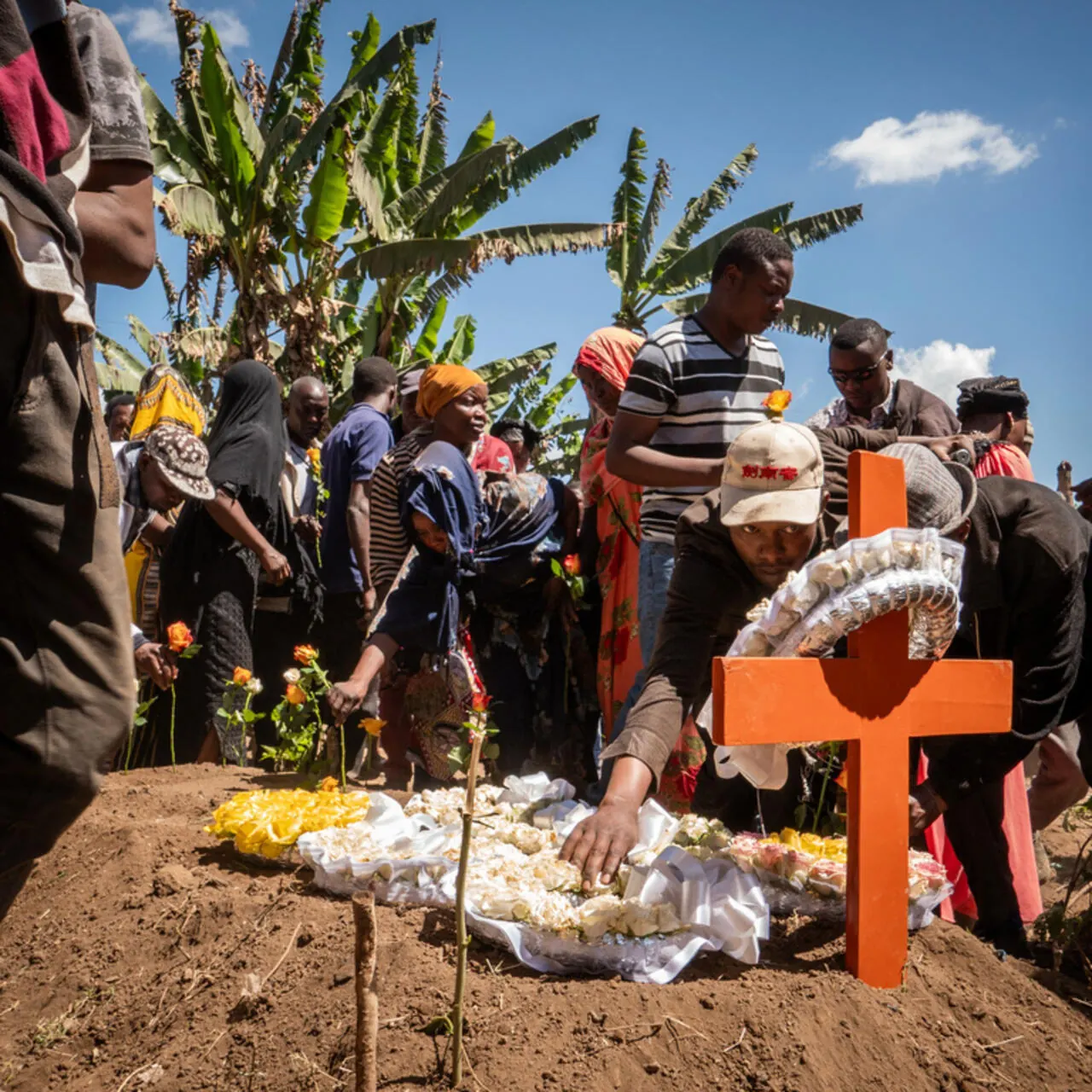
In residential neighbourhoods as in the countryside, panicked residents describe shots fired at point-blank range, scenes of lifeless bodies, hasty burials and pressure to keep quiet.
The informal economy, vital for a large part of the Tanzanian population, has been badly hit: disrupted markets, closed shops, empty petrol stations, suspended public transport.
A legitimacy in question
President Hassan's swearing-in ceremony was held on Monday 3 November before a restricted audience, amid persistent insecurity and a heavy military presence.
The combination of an extremely high election result and the absence of genuine opponents raises serious doubts about democratic competition in Tanzania. Several regional observers consider that the vote does not meet international standards.
What prospects?
Tanzania is today at a turning point. On one side, the regime holds power and says it wants to "restore order". On the other, part of society expresses its disillusionment, its sense of injustice and a fear of arbitrary rule.
The coming weeks will be crucial: how the authorities handle the protests, the calls for an inquiry into the deaths, and the restoration of freedoms (notably of information) could either calm or further radicalise the situation. For now, Tanzanians fear a spiral of violence, both silent and plainly visible, and live daily with the rift between the institutional facade and the realities on the ground.
Leave a Comment